Edvard Varda, CEO, UNCONDITIONAL Ltd, Croatia, IEDC DBA Program Attendee
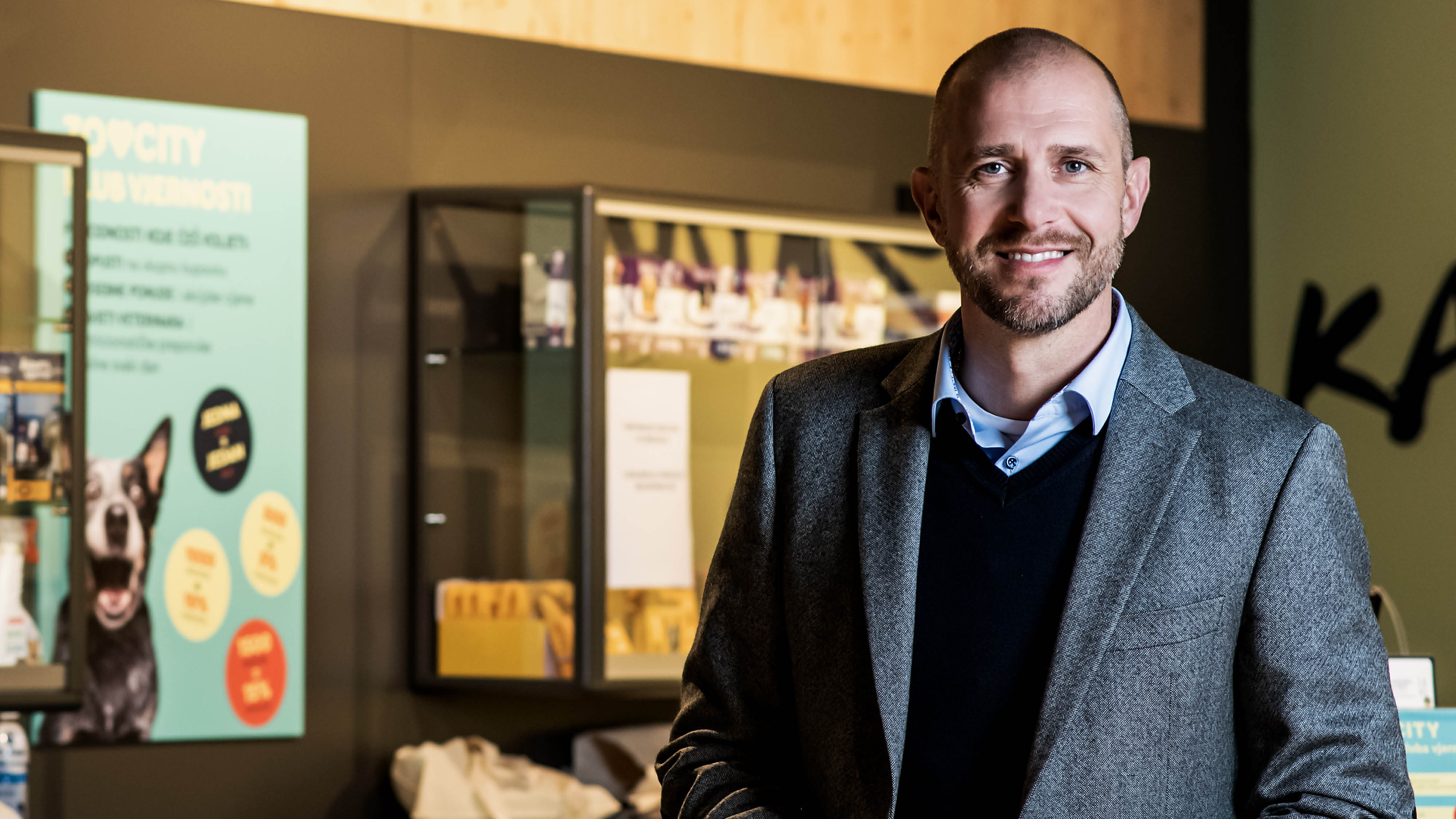
To kick off our conversation, could you share a brief version of the UNCONDITIONAL story and take us back to the beginning? Growing up alongside your father’s original venture, ZOO HOBBY, did you always know you wanted to join the family enterprise, or was there a specific moment that solidified your decision to step into the business altogether in 1997? Was there a choice of not joining the family business?:)
The story of UNCONDITIONAL really began long before the company carried that name. My father, Vatroslav, founded ZOO HOBBY back in 1974, making it one of the first specialized pet businesses in this part of Europe. I literally grew up surrounded by animals, customers, products and conversations about the business. It became part of my everyday life.
Interestingly, I never felt pressured to continue the family business. My parents gave me complete freedom to choose my own path. From very foundation of wholesale/distribution company in 1994, it was my decision, driven by curiosity and the desire to build something meaningful rather than by family obligation. Looking back, I’m grateful that I was provided with opportunity, because it meant that when I committed, I did so wholeheartedly.
The defining moment came when I took over full responsibility for distribution company in 1999. Rest of the family stepped aside completely, allowing me to make decisions, make mistakes and take responsibility. That level of trust became one of the greatest gifts a founder can give to the next generation.
In 2004, you stepped entirely outside the pet industry to found a local Volvo dealership network for four years. What triggered that departure from the family domain, and what cross-industry lessons did you bring back when you returned your full focus to the family business?
It was not about leaving but rather pursuing parallel business opportunity. Leaving the pet industry wasn’t about leaving the family business behind - it was about challenging myself and reducing single source of revenue risk. I wanted to prove that I could build and manage a successful organization outside the environment I had grown up in.
The automotive industry is extremely process-oriented, disciplined and customer-focused. Working with Volvo exposed me to international standards in retail operations, performance measurement, premium customer experience and organizational management.
Still, at time when I made decision to sell that business (2008), mayor part of profit was retained by brand owner, rather than dealership. When I fully returned only to family business, I brought back a much stronger appreciation for systems. I realized sustainable growth doesn’t happen because the owner works harder - it happens because the organization becomes better. That insight significantly influenced the way we later transformed the company.
UNCONDITIONAL has evolved alongside a massive global shift from treating pets as hobbies to seeing them as legitimate family members. How have you structurally adapted your supply chain and regional retail strategy to meet the expectations of today’s “pet parents” rather than traditional “pet owners”?
The biggest transformation has been recognizing that we are no longer simply selling pet products - we are supporting relationships between people and their pets.
That means investing in premium nutrition, veterinary diets & medicines, preventive healthcare, education and expert advice. Our retail stores have evolved into places where customers expect knowledge, empathy and professional guidance rather than just products on shelves.
On the supply chain side, we have focused on building long-term partnerships with premium international brands while strengthening regional logistics to ensure product availability across Croatia, Slovenia and Serbia. Today’s customers expect consistency, speed and trust, and our entire organization is designed around delivering on these expectations.
You have been transparent about coming close to operational failure twice, notably when merging the retail network ZOOCITY with the wholesale arm ZOO HOBBY, resulting in temporary losses of nearly €100,000 per month. Looking back, what was the turning point that allowed you to stabilize the business model and pull the company out of that financial red zone?
Those were undoubtedly the most difficult periods of my professional life. I underestimated the complexity of integrating two businesses with different cultures, systems and ways of operating.
The turning point wasn’t one dramatic decision but rather a change in mindset. I stopped believing that I personally had to solve every problem. Instead, we focused on building a stronger leadership team, improving organizational structure and making decisions based on data rather than intuition alone.
We also became much clearer about our strategic priorities. Once everyone understood where we were going and their role in getting there, the business gradually stabilized. It reinforced my belief that crises often become the greatest catalysts for organizational learning.
UNCONDITIONAL operates directly across Croatia, Serbia, and Slovenia, managing over 550 employees and €75 million in revenue. What are the unique cultural or economic challenges you face when maintaining a unified corporate identity across these different Adriatic markets?
Although these markets share many similarities, each has its own consumer behaviour, regulatory environment and business culture.
Rather than forcing complete uniformity, we focus on creating one shared purpose and one set of organizational values & behaviours while allowing local management teams enough autonomy to adapt to their markets.
For me, culture is not created by centralized control. It is created by shared beliefs, transparency and trust. If people understand why the company exists and what values guide our behaviours that drive decisions, they can successfully adapt those values to different local environments.
You frequently praise your father, Vatroslav, for stepping aside completely in 1999 and handing over true operational control and risk to you without lingering interference. How difficult was that transition psychologically for both of you at the time, and how did it shape your own identity as a leader?
I often say that my father taught me leadership not by telling me what to do, but by trusting me enough to let me learn.
Of course, every succession comes with emotional challenges. For founders, their company is often part of their identity. Yet my father made an extraordinary decision - he truly stepped back.
That forced me to grow much faster. I had no one to hide behind when decisions became difficult. At the same time, it shaped my own leadership philosophy. If I want future leaders to grow, I will have to trust them in the same way I was trusted.
Given how cleanly your father handed over the reins, how do you view the future of UNCONDITIONAL? Do you believe a family business must stay in the family, or are you preparing the organization for a decentralized, purely professional management structure down the road?
I don’t believe a business should remain in the family simply because it is a family business.
The company’s future should depend on competence, values and leadership - not genetics. Our responsibility is to build an organization that can thrive independently of any single individual.
Whether future leaders come from within the family or outside it is less important than ensuring they share our purpose and continue building the culture we’ve created.
You’ve openly confessed that your own micromanagement and localized decision-making were once the biggest obstacles to your company’s expansion, even leading to the departure of valued employees. Can you describe the exact moment or “wake-up call” that made you realize your ego was hurting the business?
There wasn’t one dramatic moment. It was a gradual realization that despite working harder than ever, the company wasn’t becoming stronger - it was becoming more dependent on me.
When talented people started leaving, I had to ask myself an uncomfortable question: Was the problem really them, or was it me?
That became one of the most valuable lessons of my career. Leadership isn’t about making every decision. It’s about creating an environment where others can make great decisions without you.
Today, you are often referred to within the company as the “Chief Vision Keeper”. How does that title change your daily responsibilities compared to a traditional CEO, and how do you successfully balance top-level control with empowering your regional executive board members?
The title reflects a shift in my role.
Today I spend far less time making operational decisions and much more time ensuring we remain aligned with our long-term purpose, culture and strategic direction.
I see my responsibility as protecting the organization’s vision while empowering our executive teams to make day-to-day business decisions. My success is no longer measured by how many decisions I make, but by how many decisions the organization can make successfully without me.
Your academic timeline spans an undergraduate degree, an EMBA, and now DBA research at IEDC. Many entrepreneurs abandon formal education once their business scales. Why has returning to academic frameworks remained a priority for you throughout your life, and how has it helped you navigate personal and professional turning points?
Education has never been about collecting diplomas.
Every stage of my education (curiosity for new competences) coincided with a new stage of the company’s development. Academic research gave me frameworks for understanding challenges that experience alone couldn’t fully explain.
Learning keeps me intellectually humble. Business evolves continuously, and leaders need to evolve with it.
You explicitly noted that your doctoral pursuit was driven by your self-admitted past mistakes in personnel management during the company’s hyper-growth phase. How did those painful management errors directly inspire the topic of your current DBA studies at IEDC: ‘Work Engagement Within Self-Determination Theory: Basic Psychological Needs and Well-being in an Organizational Context as Predictors of Work Engagement’?
Looking back, many of my biggest mistakes weren’t strategic - they were people-related.
As the company grew rapidly, I often focused on results without fully understanding the psychological needs that drive engagement and performance.
My doctoral research is, in many ways, an attempt to better understand those mistakes and develop evidence-based approaches to building healthier organizations where people can thrive while achieving excellent business results.
Self-Determination Theory revolves around autonomy, competence, and relatedness. How are you currently using the real-time findings of your research to alter the workplace culture for the 500+ employees within UNCONDITIONAL? What does a “psychologically satisfied” employee look like in your retail and wholesale divisions?
Self-Determination Theory teaches us that people perform best when they experience autonomy, competence and meaningful relationships.
We’re working on building an environment where employees have more ownership over decisions, continuous learning opportunities and stronger collaboration across teams.
For me, a psychologically healthy employee is someone who comes to work feeling trusted, respected and able to contribute meaningfully - not simply someone who meets performance targets. Rather those numerical achievements are a result of work environment that is driven by transparent and fair leadership practices across all teams and leaders.
You collaborate with academic and strategy experts to adjust company’s business model and predict market trends. How do you strike a balance between rigorous, slow-moving scientific data and the fast-paced, high-risk demands of regional retail commerce?
Science provides direction; business requires action.
Research helps us ask better questions and avoid making decisions based solely on assumptions or habits. At the same time, retail demands speed and adaptability.
The balance comes from combining evidence with practical experience. Data informs decisions, but leadership still requires judgment.
Early in your career, success might have been measured by taking over your father’s company and driving revenue. Now, with your deep dive into organizational well-being and workplace psychology, how has your personal definition of a “successful business” changed?
Earlier in my career, success was measured primarily through growth and financial performance. Today I believe sustainable success includes financial results, but also employee well-being, organizational resilience, customer trust and long-term impact.
If the company grows while people burn out, I no longer consider that true success.
You have been cited numerous times when participating in various regional conferences, especially when addressing young people, to dismantle the romanticized view of startup culture. If an aspiring entrepreneur wants to build a business that is sustainable enough to last five decades like yours, what are the most important psychological traits they need to develop?
Resilience and dedication are probably the most important.
Entrepreneurship is far less glamorous than social media sometimes suggests. It involves uncertainty, setbacks and continuous learning. Curiosity, humility, emotional resilience and the willingness to learn from failure matter much more than trying to appear successful.
Building a company that lasts decades requires patience, consistency and the ability to keep learning.
Are you successful in nurturing these traits in your son? What are the chances of him joining the family business in the future?
As a parent, I don’t see my role as preparing my son to inherit the company. Luka is a very smart young man. He connects easily with others and gets concepts right. I am very proud to be his father.
My responsibility is to help him become a good, independent person capable of making his own decisions.
If one day he chooses to join the business because he genuinely believes in its purpose and can adequately contribute, I would be happy. But I would never want him to feel obligated simply because of our family name.
Looking beyond the revenue metrics, the academic frameworks, and the daily demands of leading a regional enterprise, what is it that ultimately keeps you grounded? When you strip away the title of CEO, what are the core values, relationships, or simple moments that bring you true meaning and joy in your life?
Family remains my greatest source of balance.
Spending time with the people closest to me, learning, reflecting and staying connected to our purpose remind me why I do what I do.
At the end of the day, titles come and go. What truly matters is whether you’ve built something that improves other people’s lives - whether those people are your employees, customers, partners or the pets and families we ultimately serve. That, for me, is the real meaning behind the name UNCONDITIONAL.
WHAT ONE CANNOT FIND ON EDVARD's RESUME
The best band/artist of all times, in your opinion?
Queen, Dire Straits, George Michael on the classics side, and Armin van Buuren and Carl Cox on a more modern side.
What sports do you practice/used to practice or follow as a fan?
I used to practice kick boxing for a long time, maybe for some 12-14 years, 3-4 times a week, I also played basketball for a few years, I've always played tennis, and I still play today, but, overall - I always do a lot of various exercise, 3-4-5 hours a week.
Did you have/do you have any pets yourself, being in a pet care business?
I’ve had a number of pets over time. My last pet, a Miniature Schnauzer named Luna, was unfortunately put to sleep late last year due to cancer. I truly miss her calm, yet brave attitude.
What’s usually playing in your car while you are driving – just any radio station music, YT/Spotify music of your choice, podcasts or something else?
Lately, I really do consume a lot of Afro House music, like Black Coffee, etc...
Your favourite childhood meal?
Chips.
Your favourite childhood cartoon?
Professor Baltazar.
The piece of advice you’d give to your younger self?
Build patience. Develop modesty. Love yourself.
Related articles
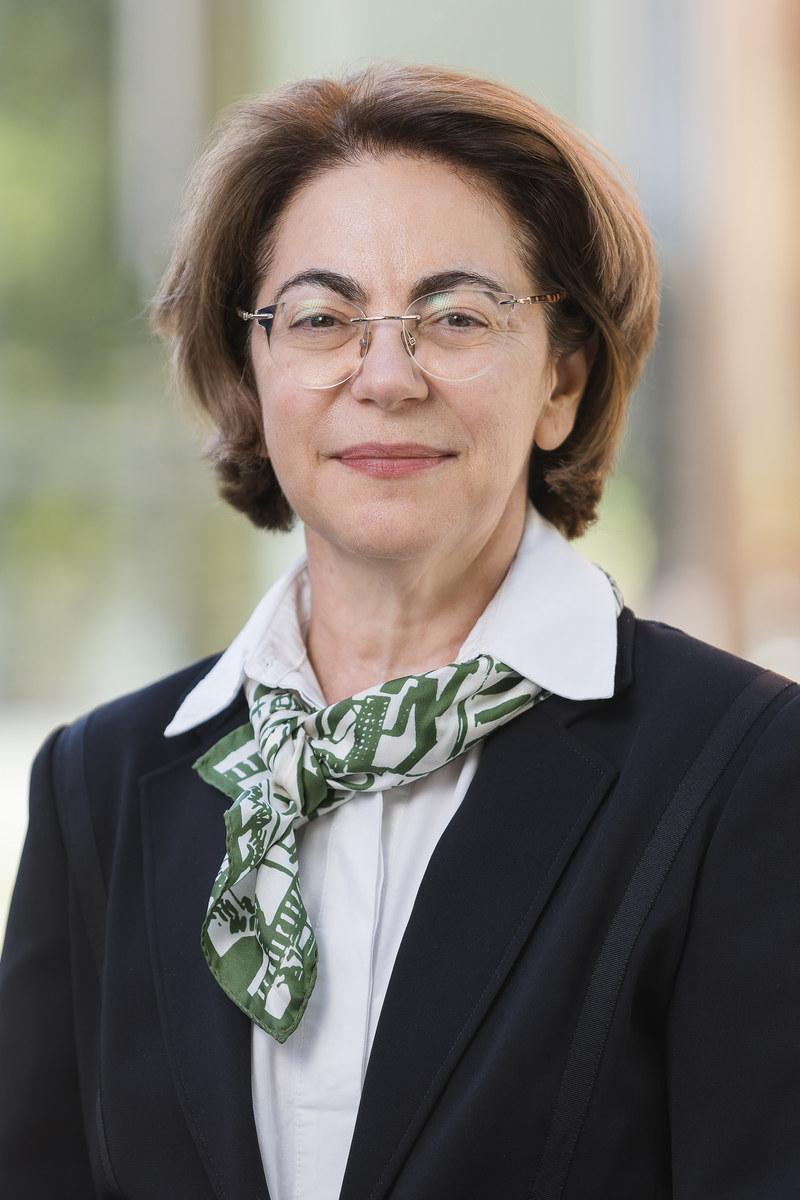
IEDC alumni discussed geopolitical challenges with Dr. Alexandra Vacroux
At a webinar on 4 November, IEDC alumni met the school’s new president and explored what shifting global dynamics mean for Europe, the global economy and business leaders.
9 November 2026
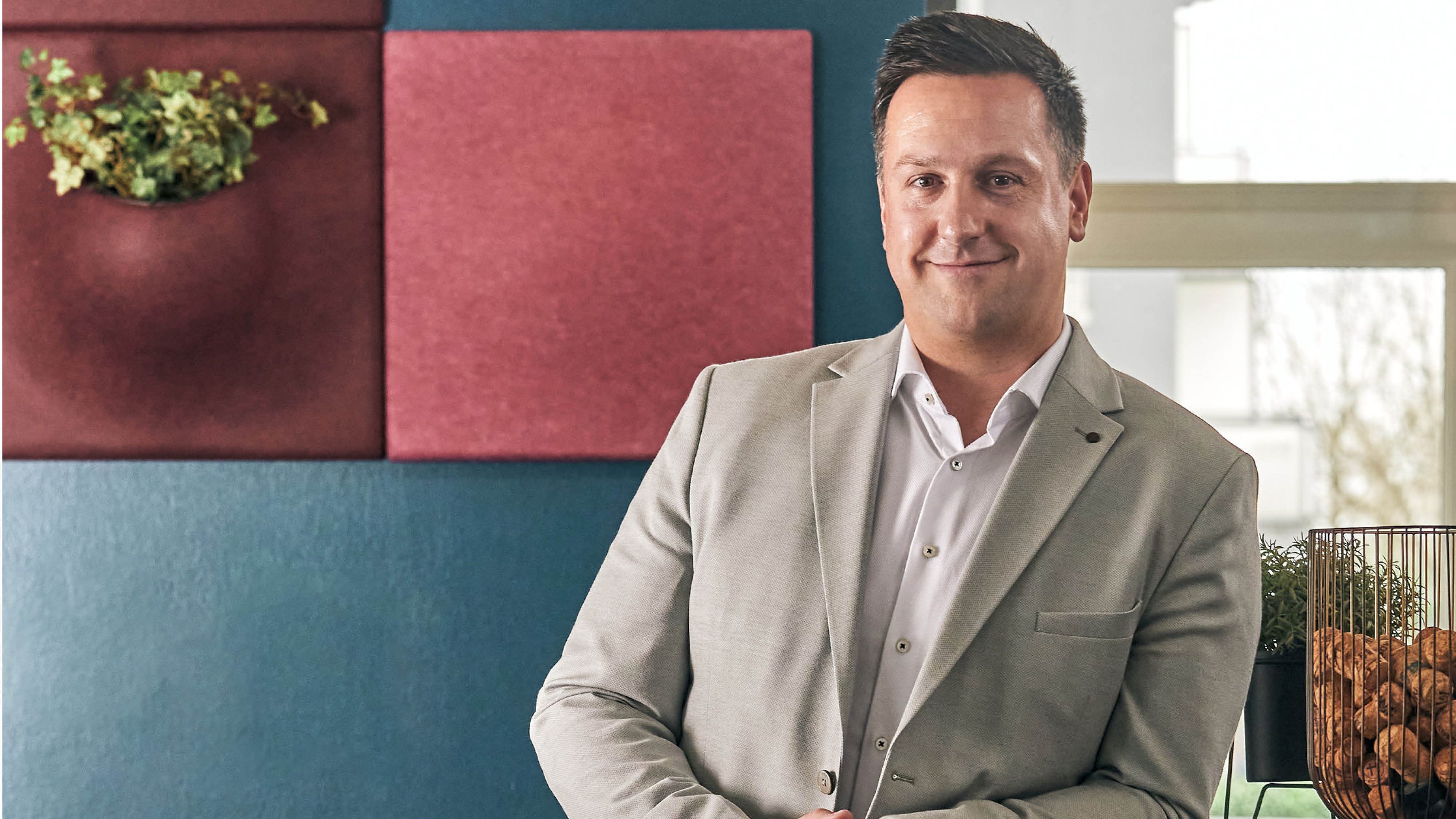
Branimir Valičević, Founder & Managing Director, Plan 2B interijeri d.o.o. · EMBA 2024–2025 · Croatia
»The environment is fast and loud, and the most valuable thing you can bring into a room is the ability to slow it down, ask what actually matters and make a decision people can trust. «
30 October 2026

IEDC appoints new Management Board as the School enters its fifth decade
As IEDC – Bled School of Management celebrates its 40th anniversary, the School is entering a new phase of its development with the appointment of a new Management Board.
24 September 2026