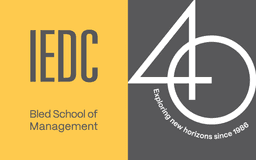
Branimir Valičević, Founder & Managing Director, Plan 2B interijeri d.o.o. · EMBA 2024–2025 · Croatia
🎓 𝗜𝗘𝗗𝗖 𝗔𝗹𝘂𝗺𝗻𝗶 𝗦𝘂𝗰𝗰𝗲𝘀𝘀 𝗦𝘁𝗼𝗿𝘆: "𝑇ℎ𝑒 𝑒𝑛𝑣𝑖𝑟𝑜𝑛𝑚𝑒𝑛𝑡 𝑖𝑠 𝑓𝑎𝑠𝑡 𝑎𝑛𝑑 𝑙𝑜𝑢𝑑, 𝑎𝑛𝑑 𝑡ℎ𝑒 𝑚𝑜𝑠𝑡 𝑣𝑎𝑙𝑢𝑎𝑏𝑙𝑒 𝑡ℎ𝑖𝑛𝑔 𝑦𝑜𝑢 𝑐𝑎𝑛 𝑏𝑟𝑖𝑛𝑔 𝑖𝑛𝑡𝑜 𝑎 𝑟𝑜𝑜𝑚 𝑖𝑠 𝑡ℎ𝑒 𝑎𝑏𝑖𝑙𝑖𝑡𝑦 𝑡𝑜 𝑠𝑙𝑜𝑤 𝑖𝑡 𝑑𝑜𝑤𝑛, 𝑎𝑠𝑘 𝑤ℎ𝑎𝑡 𝑎𝑐𝑡𝑢𝑎𝑙𝑙𝑦 𝑚𝑎𝑡𝑡𝑒𝑟𝑠 𝑎𝑛𝑑 𝑚𝑎𝑘𝑒 𝑎 𝑑𝑒𝑐𝑖𝑠𝑖𝑜𝑛 𝑝𝑒𝑜𝑝𝑙𝑒 𝑐𝑎𝑛 𝑡𝑟𝑢𝑠𝑡." 💡 — Branimir Valičević (EMBA 2024–2025), Founder & Managing Director, Plan 2B interijeri 𝗱.𝗼.𝗼.
How do you turn a challenging market into a record-breaking year with over 81% revenue growth? For Branimir, the answer lies in deep focus, sharp commercial strategy, and knowing what not to do.
Founded in Zagreb in 2018, Plan 2B interijeri specializes in high-end corporate interiors and office space transformation, serving as a strategic partner for global brands like Bene and SEDUS. Operating as a lean boutique team of eleven across Zagreb and Ljubljana, the company achieves an exceptional ~€280,000 in revenue per employee.
In our latest IEDC Alumni Success Story, Branimir shares:
🚶♂️ 𝗧𝗵𝗲 𝗘𝗻𝘁𝗿𝗲𝗽𝗿𝗲𝗻𝗲𝘂𝗿𝗶𝗮𝗹 𝗟𝗲𝗮𝗽: From secret university degree switches and walking the Camino de Santiago to launching Plan 2B.
🏢 𝗥𝗲𝗱𝗲𝗳𝗶𝗻𝗶𝗻𝗴 𝗪𝗼𝗿𝗸𝘀𝗽𝗮𝗰𝗲𝘀: Why modern offices aren't rows of desks, but living social hubs built on ergonomics, acoustics, and strong company culture.
📈 𝗦𝘁𝗿𝗮𝘁𝗲𝗴𝗶𝗰 𝗚𝗿𝗼𝘄𝘁𝗵: How clearing out unprofitable projects during 2024 set the stage for an €2.8M record in 2025.
🎓 𝗧𝗵𝗲 𝗘𝗠𝗕𝗔 𝗜𝗺𝗽𝗮𝗰𝘁: How his time at IEDC sharpened his leadership style and decision-making.
INTERVIEW:
Could you briefly walk us through your professional journey before Plan 2B interijeri?
Let me start with a confession: none of it was planned, and I made the first big decision in secret. I enrolled in mathematics at the Faculty of Science in Zagreb, but halfway through my second year, none of the career options felt like me. So I sat the economics entrance exam without telling my parents (I was fairly sure they would disown me), got in, and studied both degrees in parallel for a year. Close to breaking point, I finally came clean: economics had won.
Economics was a rebirth. Handball, AIESEC – two and a half years of sales, international conferences and practical leadership lessons – and three internships helped me find my direction: audit at PwC (not for me), marketing at Red Bull (loved the job, less so the atmosphere) and sales at Procter & Gamble, which settled it. I’m an introvert by nature, but I was made for sales.
The rest is a sales career with a few plot twists. I defended my master’s thesis on a Tuesday and started at Steelcase on a Friday – after finding their rejection e-mail in my spam folder and calling just to ask where I had gone wrong. The man on the other end called it “the Columbo technique”, said things had changed over the summer, and invited me to discuss salary. Three years as Market Manager followed. When Steelcase moved to a dealership model for the Balkans in 2013, I spent another five as a Workplace Consultant with the authorised dealer in Zagreb. By 2018, I had eight years in the industry, several million euros of projects behind me and a growing feeling that the next chapter would have to be my own.
Was there a defining moment that made you leave a structured corporate path and jump into entrepreneurship?
There were two, and the first one I missed. A few years in, I had become very hard to replace and proposed to my manager that we open the dealership for Croatia together. He wasn’t bold enough, I wasn’t decisive enough, and it’s like sport: miss a clear chance and the other team punishes you. Soon afterwards, the local structure was sold, and for the next four and a half years I worked as if it were my own company. It wasn’t.
The second moment came when I asked for a modest share of the year-end profit after generating several million euros in revenue. The answer was no, so I handed in my notice. Then came the counter-offer: double the share, a 15% raise, a new BMW and the title of country manager. No, thank you; where was that offer two months earlier? I’m grateful, though, because that is when Plan 2B was born.
Before starting the company, I walked the Camino de Santiago for a month with friends. Our WhatsApp group was created on 28 April 2017; our flight departed exactly a year later, entirely unplanned. My wife, with two small children at home, told me to go before I could finish the speech I’d been preparing for weeks. She could see I needed it. I returned with a clear head and a full heart, and in June 2018 Plan 2B interijeri was founded.
Which brings us to the name. Was it really a plan B?
Like most good names, I thought about it far too much, then stopped, and it came on its own.
My working life revolves around plans: relocation plans, fit-out plans, project plans. But my own plan had always been to run a business. I’d also stumbled upon research claiming that companies with the number 2 in their name do better. I never checked the methodology, in case it turns out to be wrong. Finally, I knew my focus: B2B.
Then it clicked: Plan2B. A plan, a 2 and a B. If someone reads it as ‘plan B’, I don’t mind; it was the best plan B I ever had. ‘Interijeri’ came later: registration rules required me to add what we actually do.
What did the first months look like?
Like a one-man band with a spreadsheet. Before the Camino, my wife and I worked out three business scenarios in Excel. I didn’t need numbers to know this made sense; she made sure the numbers existed. I then approached Bene, the Austrian manufacturer I wanted as my first partner, convinced storytelling would win them over. They asked for the numbers. We sorted it out on the second visit, and once Bene trusted a company less than a month old, other brands stopped asking too many questions. Clients I’d worked with for years also signed with a one-man band, and I’m still grateful. Our most optimistic scenario predicted a sales assistant after a year and five people after four. We beat it so badly I stopped trusting my own spreadsheets.
Plan 2B has built a strong reputation for turning corporate environments into functional, ergonomic and aesthetic workspaces. How have client demands evolved in recent years – and which trends are shaping workspace design today?
When I started selling office furniture in 2010, the conversation was about square metres and how many desks would fit. Today, a good client’s first question is: why would my people come to the office at all? That’s a different brief, and the best thing that’s happened to our industry.
The pandemic didn’t invent hybrid work, but it removed the excuses. The office is now where culture, trust and new ideas get built. It has to earn the commute. That means fewer identical desks and more variety: focus rooms, acoustic pods, informal meeting lounges and kitchens that become the company’s social heart. We don’t design places to sit; we design places to meet.
Three trends appear in almost every project. First, acoustics and ergonomics are now basic expectations. Second, the office as a brand statement: a well-designed space tells candidates more about your culture in thirty seconds than a careers page does in thirty minutes. Third, flexibility and longevity: modular systems, lasting materials and partners like Bene or SEDUS who share that approach. And a fourth: clients want a partner responsible for the whole result. That’s the gap we built Plan 2B to fill.
2024 was a tough year for the whole commercial interiors market, yet 2025 turned out to be a record year for Plan 2B – revenue up more than 80%, to almost €2.8 million.
Part of it is the cycle: projects were postponed and decisions dragged on in 2024. But a slow year is a gift if you use it. We tightened processes, invested in the team, built our pipeline and declined projects that would have kept us busy but not profitable. When the market returned in 2025, we were ready, with postponed and new projects arriving together.
The other part is focus. We’re a boutique team by choice: eleven people with real responsibility, focused on high-value B2B projects where our advice makes a difference. Our revenue per employee comes from choosing the right work.
You have also opened a showroom in Ljubljana. What’s behind that?
Ljubljana was the logical next step. We already had Slovenian clients and partners; a showroom says “we’re here to stay”. There’s a sentimental side, too: after two years of regular drives to Bled, an office in Slovenia felt almost like a formality.
It has been almost a year since you completed your Executive MBA at IEDC. Looking back, how has the transition been – from balancing studies with the business to applying what you learned day to day?
The first answer is simple: I got my weekends back, and my family got me back. I started the EMBA in early 2024 while finishing an executive coaching academy at LQ, which tells you everything about my sense of timing. For two years, it was business by day, reading by night and modules in Bled in between, while steering the company through its hardest year and then its best. I wouldn’t recommend the timing, but I wouldn’t change it: there’s no better test of a framework than applying it on Monday to Friday’s problem.
There was no dividing line between studying and applying. From the first module, lessons went straight into how we read our numbers, prepare negotiations and approach strategy as choices rather than a wish list. Now it’s a habit instead of an assignment. I no longer open the slides, but I hear the professors’ questions in every important meeting. Slightly annoying and extremely useful.
In what concrete ways has your leadership style evolved since the EMBA – and is there one lesson or framework that turned out to be transformative for the business or the team?
The biggest shift is that I talk less and ask more. Founders tend to have an answer for everything, because the company existed in their head for years. The programme made it painfully clear that my answers had become a bottleneck. I started practising what I taught as a business coach: ask the question, then wait for the answer. Running three unplanned coaching sessions for classmates in my first two weeks at Bled reinforced that lesson. Back home, decisions got faster because the team stopped waiting for me.
If I had to pick one framework, it’s strategy as choosing what not to do. In our market, a small company can chase every tender, product line and client. The EMBA gave me the tools and courage to define where we play, how we win and what to decline. Our 2025 numbers largely reflect what we stopped doing in 2024.
The second lesson was more of a feeling: studying alongside people from different countries and industries, you realise your problems aren’t that special. That’s an enormous relief.
Who would you recommend the IEDC experience to?
To anyone honest enough to admit they don’t know everything – which should be everyone, but isn’t. I came in with fifteen years of experience and my own company; I could easily have told myself there was nothing left to learn. That would have been the most expensive mistake of my career. The beauty of IEDC is that it works at every stage: for a young manager who wants to take the next step, for someone mid-career who feels stuck, and for an entrepreneur who has built something and wants to build it better. The EMBA is the full experience, but the school also runs shorter, very well-designed programmes if two years is too much to take on right now. My advice is simple: pick the one that fits your life and go. It is never too late to learn and Bled in the morning before class, with the lake and the mountains, is a bonus no other business school can offer.
In today’s fast-moving business environment, what truly defines a successful manager and leader?
I would separate the two, because I have met great managers who were not leaders and brilliant leaders who were terrible managers. A manager makes sure the right things get done on time and on budget, properly. That is a craft, and it deserves more respect than it gets. A leader makes people want to do those things, and want to stay when it gets hard.
What defines a successful one today? Calm, mostly. The environment is fast and loud, and the most valuable thing you can bring into a room is the ability to slow it down, ask what actually matters and make a decision people can trust. Then honesty with the team, with clients and with yourself about what is and isn’t working, starting with yourself and never with blaming others.
And consistency: people will follow someone demanding, but they can’t follow someone who is a different person every Monday. I am competitive, by the way, but the only opponent I take seriously is myself with updated software – every lesson, every programme, every win and the occasional loss is a new update. I’m still working on all of the above, in case anyone from my team is reading this.
How much do technology and the latest AI developments affect your business and the way you work?
More than you’d expect from a company that sells desks and chairs, and less than the headlines suggest. Technology has shaped our design work for years: every project is planned in 3D, and clients walk through their future office before a wall is built. AI has accelerated visualisations, documentation, research and proposals. What took a day now takes an hour, leaving more time for better questions.
Where it doesn’t help is what matters most: understanding how a client’s people work, what worries them and what their space should say about them. No model has walked into an office at eight in the morning and felt the mood. My approach is simple: use AI aggressively for repetitive tasks and protect time for everything human. The same goes for the office: the more work gets automated, the more it becomes about what can’t be. For our business, that’s very good news.
As a business owner and a father of four, how do you manage to run a growing business and still be present for your family?
The honest answer is that ‘balance’ is the wrong word. There is no day when the company and the family are in perfect balance. There are weeks when the business gets more and weeks when the kids get more, and the only thing I really control is that nobody gets the leftovers for too long.
A few things help. Being present means being present – not physically in the room with my head in e-mails or on my phone with colleagues and clients. So when I’m with the kids, the phone goes away (most of the time), and when I’m at work, I work. A good team helps enormously; the more I trusted them, the more evenings I got back. And my wife deserves an interview of her own: she built the three business scenarios before Plan 2B existed, she supported me going to the Camino when I needed it most, and she has been the calm half of this story ever since. The kids themselves are excellent management training: four of them means four personalities, four parallel negotiations and a daily reminder that you are not nearly as much in charge as you think.
Business and life rarely follow a straight line. What is your personal philosophy when it comes to enjoying the journey and embracing life’s surprises?
My company is called Plan 2B, so the philosophy is right there on the door. I studied mathematics, then economics, sold energy drinks and audited companies before selling office chairs. I started my business expecting the plan to change. It did – roughly every year.
Two things shaped that philosophy: my grandmother and the Camino. She used to say every house has its cross (svaka hiža ima svoga križa). Nobody lives the ideal scenario, so why wait for it? The Camino taught me that a month outside your comfort zone reveals more about you than any plan.
My rule is simple: start with yourself, not with blaming others; keep a direction but hold the plan loosely. When life changes the brief, don’t complain, redesign. I’ve also stopped arguing with synchronicity: our WhatsApp group and flight fell exactly a year apart, unplanned. The best things in my life tend to arrive like that.
And finally – what are the small things that bring you joy and help you unwind after a particularly busy day?
I once described myself as a racing car that runs flat out and occasionally pulls into the pit stop to recharge and the pit stops have become more frequent, by my own choice. Sometimes it’s a wellness weekend, sometimes an evening out with my wife, sometimes a short escape with the guys and the motorbikes, and more and more often, the kids. A walk with no phone. And the moment at the end of a project when the client walks into the finished space and, for a few seconds, says nothing. That silence is the best part of my job, and no revenue figure beats it.
WHAT's NOT ON BRANIMIR's CV:
Any student or youth organisations you were involved in when you were younger?
AIESEC Zagreb, and not just a little. Two and a half years, Vice-President in 2007/08 and President in 2008/09: my first real sales, my first international conferences and my first leadership lessons, usually from people in serious companies who came to tell us how they had failed. I could write a small book about it. Leading volunteers who can walk away at any moment is the best leadership school there is; everything after that was easier.
What sports do you play or follow?
Handball. I played competitively for 13 years, including the university team. We went to Paris for the world university championships, still one of my favourite trips. These days my knees have opinions, so I'm a fan rather than a player. And I don't miss a Croatian national team match if I can help it.
The latest TV series you watched that you can recommend?
Yellowstone, at the moment and I'm hooked. On the surface it's horses and stunning landscapes, which is exactly what I need after a long day. But underneath it's all about people: family, loyalty, who you can trust, how you build and defend what's yours. You meet almost as many characters in one season as in a year of client meetings, and a surprising number of them I'm sure I've already met in business. Highly recommended, with one warning: it's very hard to stop at one episode.
How good are you at multitasking? How many tasks can you juggle at once?
Let me answer with facts: for one full year I studied a year of mathematics and first-year economics at the same time, in secret, and passed both. Today it's four children, two countries and one company, so multitasking stopped being a skill a long time ago. It's the operating system. Realistically, I juggle three things well enough. The fourth is where mistakes happen, and the mathematics degree never fixed that.
Are you on Duolingo? Do you play chess? How many foreign languages do you speak?
Not on Duolingo, there are no spare minutes left in my day. I speak English and German, and Croatian gets me surprisingly far in Ljubljana, one meeting at a time. Chess? I’d like to play it far more because it reminds me of playing it with my Grandpa and it was fun!
How good a cook are you? What's your favourite dish?
Reliable on weekends, dangerous on weekdays. The grill is mine in summer; the rest of the year my favourite dish is anything my wife makes better than I do, which is everything.
Who is the best music band or artist of all time, in your view?
Queen. There is no argument, only people who haven't listened properly. And one thing from a completely different corner of my wish list: an André Rieu open-air concert on the main square in Maastricht. I want to be there within the next two years – fingers crossed.
The last travel destination you've been to – leisure or work?
Both, in one trip. This summer. I had a meeting at a factory in Alicante, Spain, so I proposed something slightly crazy to the family: let's do it as a proper road trip in the van. Zagreb, Genoa, Cannes, Monte Carlo, the Côte d'Azur, Montpellier, Barcelona, Valencia (meetings done) and then home through the interior: Zaragoza, Avignon, Carcassonne, Annecy, Milan, Zagreb. Four kids, one van, a lot of talking, even more laughing, a pub quiz in van edition and a long list of sights ticked off. It turned out brilliantly for all of us, and we proved to ourselves that a road trip and business meetings can fit in the same trip.
If you could be a Marvel superhero – or any other character from movies or cartoons – who would you be, and why?
Good question, because I'm a real Marvel fan. I've been waiting impatiently for every new film since the very first one, and these days even more so, because I now go to each new one with my son. So, silly as it sounds - Tony Stark. He's always inventing something, he's ridiculously capable, he uses all of it to protect people, and he has a very good time along the way. That last part matters more than it seems: we only get one life, and it goes by fast. Besides, the man built his first suit in a cave with a box of scraps – next to that, my three Excel scenarios look like serious planning.
Sorodni članki
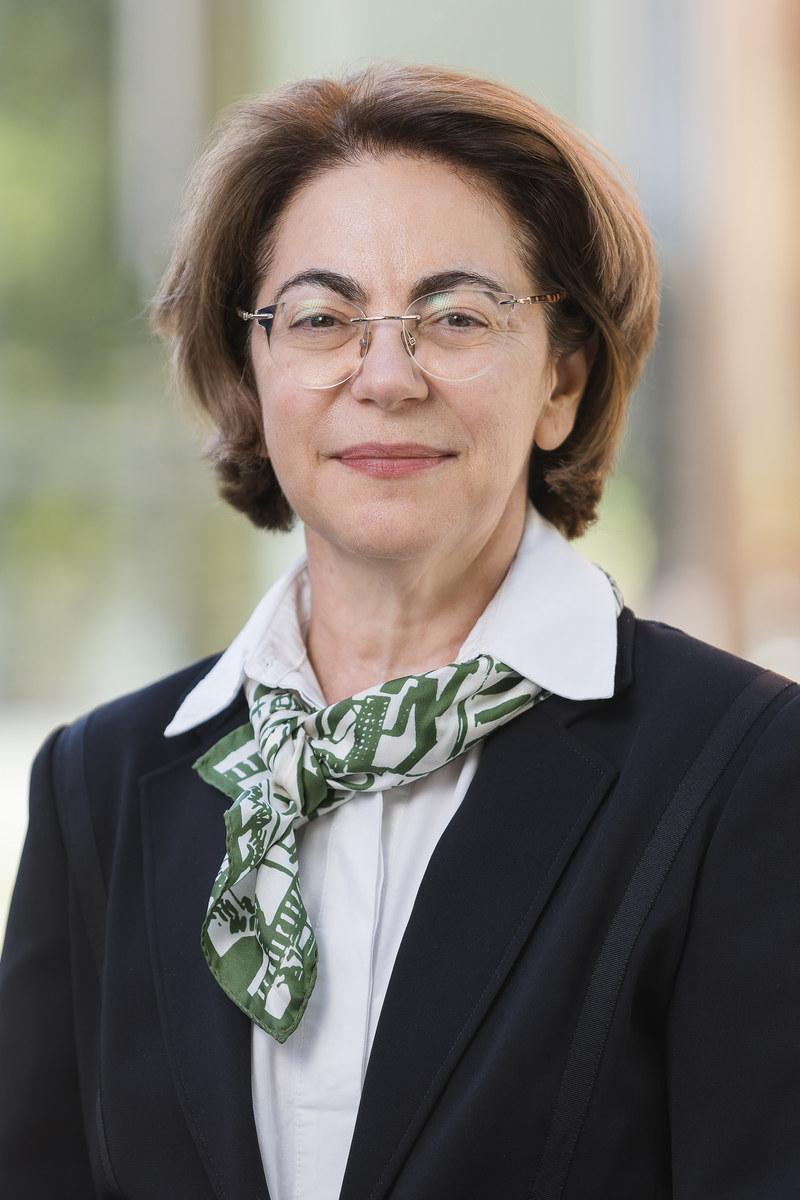
Alumni IEDC so z dr. Alexandro Vacroux razpravljali o geopolitičnih izzivih
Alumni IEDC so na spletnem seminarju 4. novembra spoznali novo predsednico šole in se pogovarjali o tem, kaj premiki v svetu pomenijo za Evropo, svetovno gospodarstvo in poslovne voditelje.
9. november 2026

IEDC ob vstopu v peto desetletje imenuje novo upravo
IEDC – Poslovna šola Bled ob 40. obletnici z novo upravo vstopa v naslednjo fazo razvoja.
24. september 2026
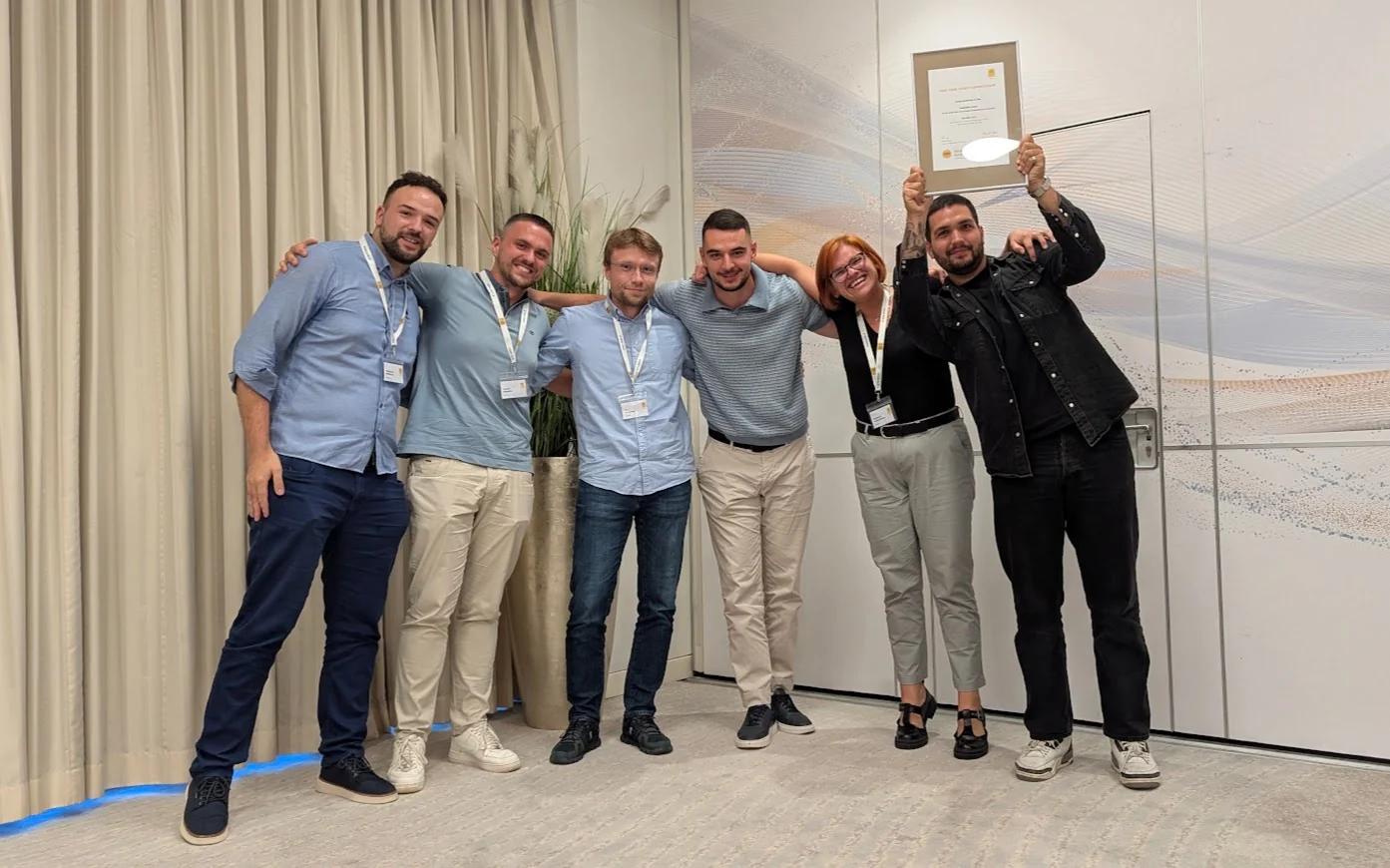
🏆 KONČAR Ekipa zmaga IEDC Case Study Competition Hrvaška!
Po dveh intenzivnih in navdihujočih dnevih timskega dela, strateškega razmišljanja in kreativnega reševanja problemov v Zagrebu, smo ponosni, da je KONČAR Group ekipa je zmagala hrvaški državni krog IEDC Case Study Competition!
16. september 2026